Discover the benefits of engineered stone
The worktop is the centrepiece of the kitchen, which is why its choice deserves careful thought. It is exactly the part of the fit-out you should not skimp on. A worktop has to be tough enough to withstand wear, and its looks matter too. Read on to find out what to watch for when choosing one.
How to choose the right stone for your kitchen
A well-chosen worktop can be the jewel of any kitchen. The choice matters not only for looks but, above all, for function. So how do you pick the right one for your kitchen?
Natural stone
Natural stones such as granite and marble are very popular. Natural stone is made of minerals and comes in many colour variations, each with its own advantages and drawbacks.
Let us be honest: the main drawback of natural stone is its price, which is somewhat higher. Its greater porosity can also be an issue — it can stain more easily, which is not ideal in a kitchen.
If you have natural stone at home, sealing will be familiar to you. For natural stone to keep its original look for as long as possible, thorough sealing is needed every year.
Its advantage, besides a luxurious and unique look, is an exceptionally hard-wearing material that does not scratch easily.
Engineered stone
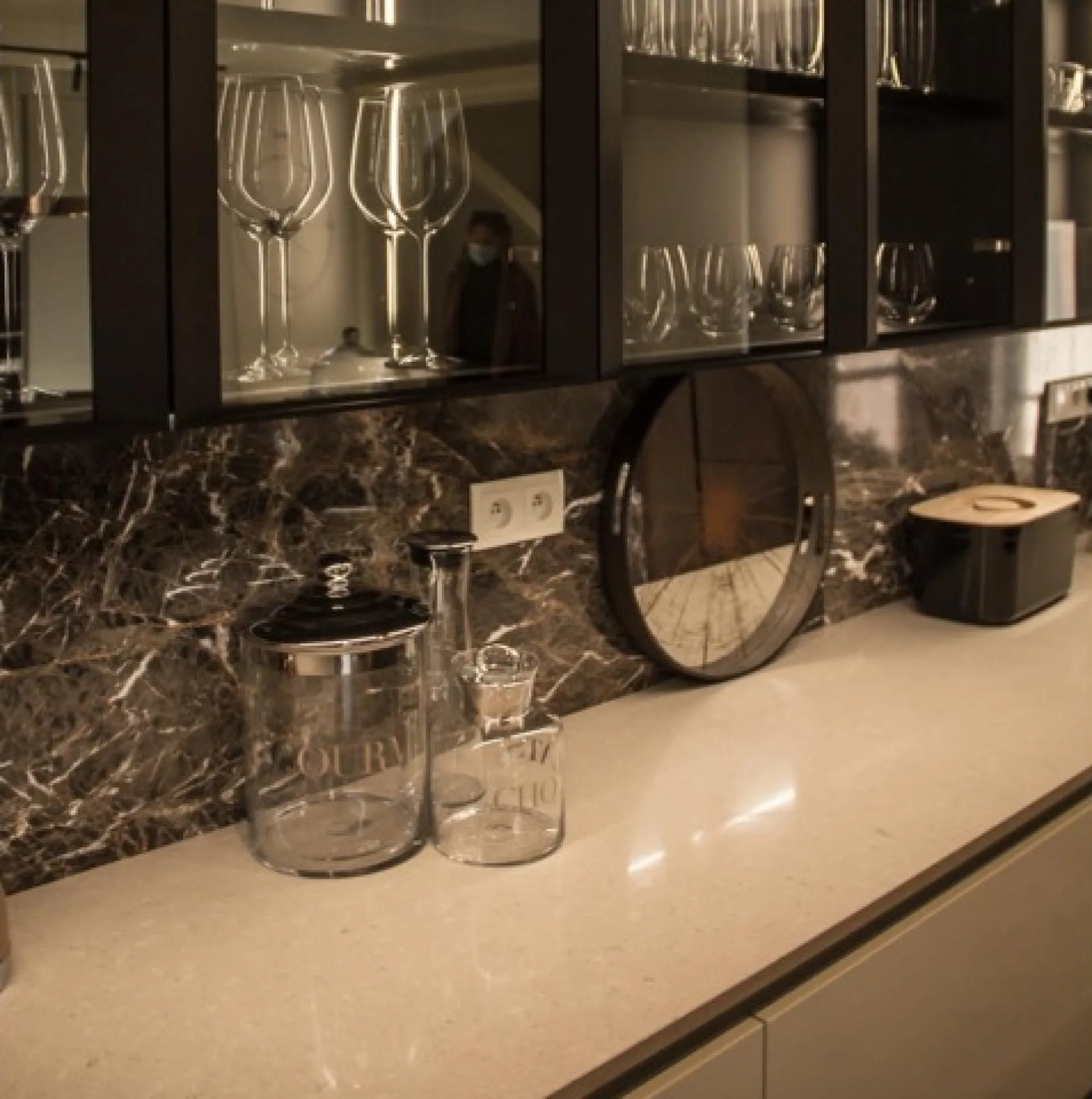
If you long for natural stone but your budget is limited, engineered stone can be a great alternative. What is it? Engineered stones are man-made from materials that imitate natural stone. Besides a flawless look and a lower price, they have plenty of other benefits.
One of their many strengths is high resistance to stains, scratches and heat. They are also easier to maintain than natural stone, as yearly sealing is not needed at all. The reason lies in their composition: they are made from a mix of sand, crushed stone and a binder. Installation is simpler too.
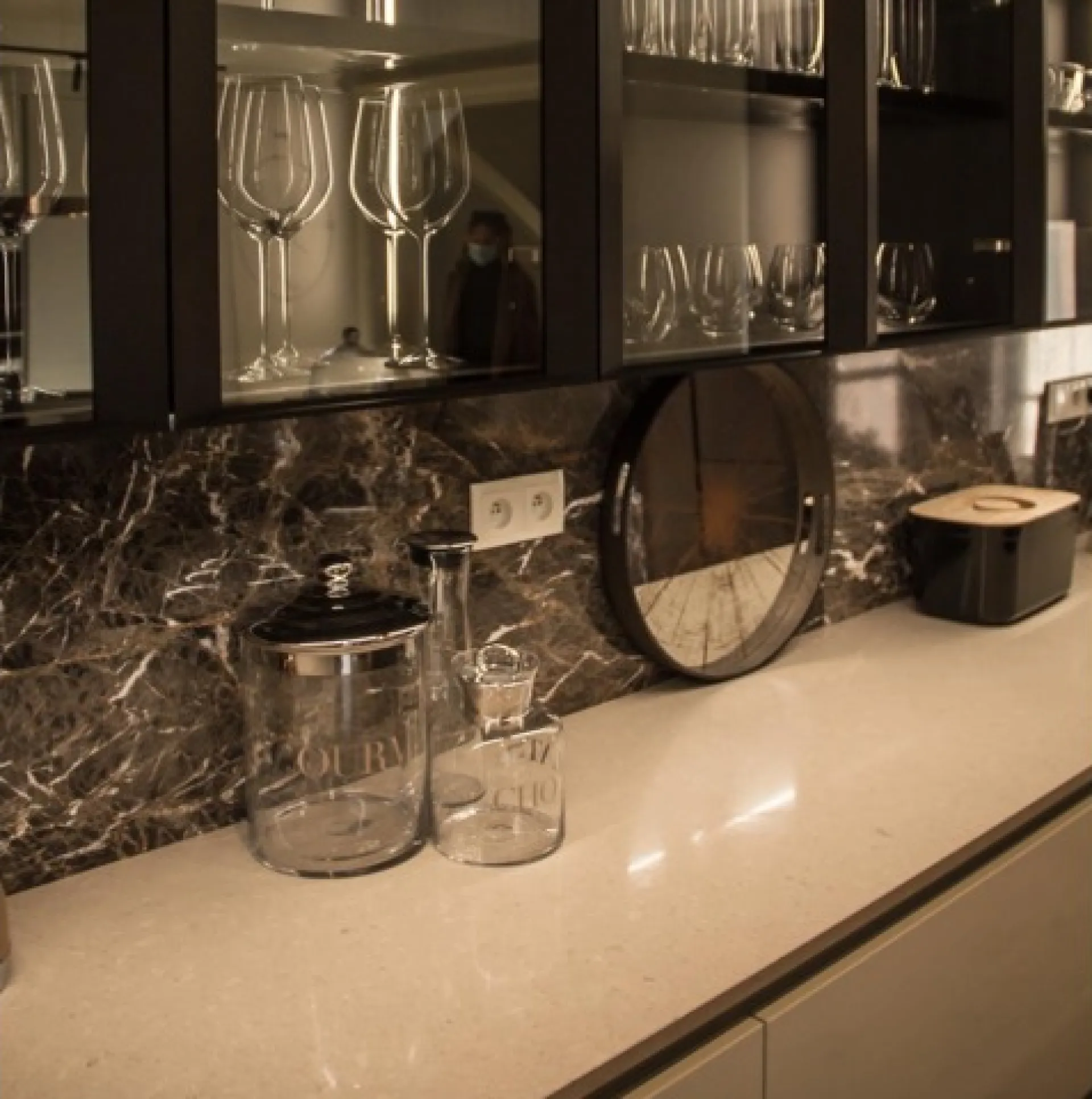
An engineered stone worktop is the perfect addition to any kitchen. Its elegant, modern look shows off your home while giving you a surface that is easy to clean.
You no longer need to worry about bacteria or mould: the material is non-porous and resists not only stains but odours as well.